Cruise Ship Technology: 8 Revolutionary Innovations Transforming Your Journey
Introduction
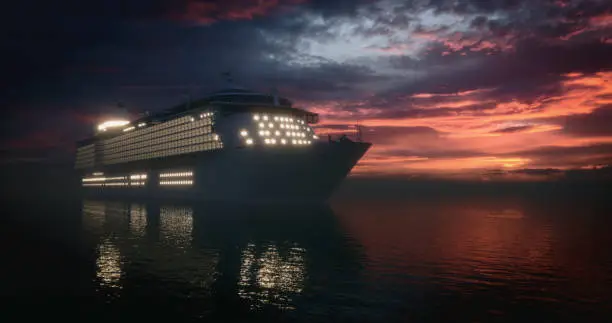
The image of a cruise ship has long been imbued with classic romance the gentle sway of the deck, the endless horizon, the formal dining rooms.But beneath the polished brass and shiny hull, a quiet, technological revolution is taking place.The modern cruise ship is no longer just a floating hotel;It is a marvel of engineering, a hub of digital innovation and a testament to an industry committed to the future.
Today we embark on a journey to explore the ground breaking technologies that are fundamentally changing the maritime experience.From the engine room to the top deck, these eight revolutionary innovations don’t just enhance your vacation they redefine the meaning of sailing.
Table of Contents
1. The Smart Ship: IoT and Hyper Connectivity
Imagine a ship that thinks for itself.This is the reality of the Internet of Things (IoT) at sea.A modern cruise ship is equipped with thousands of sensors, continuously collecting data on everything from engine performance and fuel efficiency to the number of towels in the spa.
For you, the guest, this hyper-connectivity translates into a seamless experience.Smart wristbands or mobile apps act as your cabin key, your payment method and your personal concierge.They can guide you to a free lounger by the pool, alert you when your table is ready at a specialty restaurant, or even help you find family members elsewhere on the spacious ship.This network creates a fluid, personalized journey, eliminating friction and allowing you to focus on what really matters: relaxation and adventure.
2. Navigating with Pinpoint Precision: Dynamic Positioning & AI Routing
Gone are the days of a purely mechanical basis and rough estimates.Dynamic Positioning (DP) systems use a combination of GPS, thrusters and propellers to keep a cruise ship perfectly still even in strong winds and currents.This technology is a game-changer for vulnerable ports and sensitive environmental areas such as the Great Barrier Reef, allowing safe and stable docking without dropping anchors that could damage precious ecosystems.
In addition, AI-powered routing systems analyze real-time data about weather, ocean currents and even other sea traffic to plan the most efficient and comfortable course.This means easier sailing, optimized fuel consumption (reducing the environmental footprint) and the ability to avoid storms, ensuring that days at sea are as peaceful as possible.

3. A Clearer View Beneath the Waves: Virtual Aquariums and Underwater Drones
The mystery of the deep blue sea has always been part of the allure of cruising.Now technology is lifting the curtain.Some of the most innovative cruise ship designs feature “virtual portholes” in interior cabins, which are actually high-definition screens that stream live footage from external cameras, providing views to all guests.
Even more impressive are the underwater drones and submarines that are now being deployed.Companies build luxury submersibles that take small groups hundreds of feet below the surface, providing a front-row seat to vibrant coral reefs and marine life.For those who prefer to stay dry, 4K underwater cameras mounted on the hull can live stream the aquatic world to screens throughout the ship, turning the entire ship into a walking aquarium.
4. The Green Giant: LNG Propulsion and Advanced Emission Control
The cruise ship industry is moving towards a green future, and technology is leading the way.The most important leap forward is the use of liquefied natural gas (LNG) as primary fuel.Ships powered by LNG virtually eliminate sulfur oxide and particulate emissions and significantly reduce nitrogen oxide and carbon dioxide production compared to conventional marine fuels.
Beyond LNG, advanced exhaust cleaning systems (scrubbers), waste heat recovery systems that reuse engine heat for electricity, and state-of-the-art water treatment plants that make the water cleaner than when it was taken in are becoming standard.These innovations ensure that the amazing places we visit are preserved for future generations.
5. Broadway of the Sea: Spectacular stage technology
Forget ordinary steps and fancy curtains.The theaters of modern megaships are technological marvels that rival those of Broadway and the West End.We’re talking about multi-million dollar productions:
Flying Track: For aerial acrobatics and performers flying above the audience.Projection Mapping: Transforms entire scenes and backdrops into dynamic, immersive environments.
Robotic stage elements: floors that rise and fall, sets that rotate and reconfigure autonomously.Laser and holographic effects: create illusions and spectacles that were once impossible.This blend of art and engineering provides captivating world-class entertainment that is the pinnacle of the cruise ship experience.
6. A Culinary Revolution: Robotic Bartenders and 3D Food Printers
The dining experience has been utterly transformed.Walk up to a futuristic bar and place your order on a tablet.Within moments, a robotic arm, with flawless precision, selects the glass, adds ice, measures the perfect pour of spirits and mixers, garnishes, and serves you a flawless cocktail every single time.
Looking further ahead, 3D food printers are beginning to make appearances, crafting intricate chocolate sculptures for desserts or creating personalized pasta shapes.In the galley, AI helps manage inventory and predict passenger dining preferences, reducing waste and ensuring your favorite dish is always available.This tech empowers the human chefs and mixologists to focus on creativity and complex dishes, elevating the entire culinary journey.
7. The Connected Cabin: Personalization at Your Fingertips
Your stateroom is now your personal command center.Voice-activated assistants, like Amazon’s Alexa adapted for the cruise ship, allow you to control lighting, temperature, and curtains without lifting a finger.You can ask for the day’s schedule, order room service, or play your favorite music.
Smart TVs offer not just movies on demand, but also access to your personal photos from the day’s excursions, your onboard account, and even the ability to order from the dinner menu.This hyper-personalized environment ensures your private retreat is tailored perfectly to your mood and needs.
8. Safety First, Reinvented: Wearable Tech and Enhanced Surveillance
Safety is the paramount concern for any cruise ship, and technology has made the rigorous drills even more robust.Modern life jackets are lighter and more comfortable, and some are equipped with integrated locator beacons.
The most profound innovation, however, lies in wearables.During the mandatory muster drill, RFID chips in your smart wristband can automatically check you in, making the process faster and more efficient.In the highly unlikely event of an emergency, these wearables would allow crew to pinpoint the location of every passenger and crew member instantly, facilitating a quicker, more organized response and ensuring everyone is accounted for.Advanced surveillance systems with facial recognition also help enhance security throughout the vessel, providing peace of mind for all on board.
Conclusion: The Voyage Ahead
The magic of a cruise will always lie in the salt spray, the golden sunsets, and the joy of discovery.These technological innovations do not replace that magic; they enhance it.They remove hassles, elevate comfort, prioritize sustainability, and unlock new layers of entertainment and wonder.
The modern cruise ship is a testament to human ingenuity a city at sea that is smarter, cleaner, and more awe-inspiring than ever before.As you step aboard your next vessel, take a moment to appreciate the invisible network of innovation working tirelessly around you.It’s all designed for one purpose: to ensure your journey is nothing short of extraordinary.The future of cruising is here, and it’s inviting you aboard.
Can cruise ships really predict weather before it happens?
Yes AI analyzes ocean data in real time to reroute ships for smoother sailing.
Do modern cruise ships use less fuel than older ones?
Yes advanced hull designs and hybrid engines cut fuel use by up to 30%.
Is onboard Wi-Fi actually fast enough to stream?
Absolutely satellite and 5G tech now deliver streaming-quality internet even in the middle of the ocean.