Cruise Ship Sustainability: 7 Groundbreaking Eco Campaigns Changing the Industry
Introduction
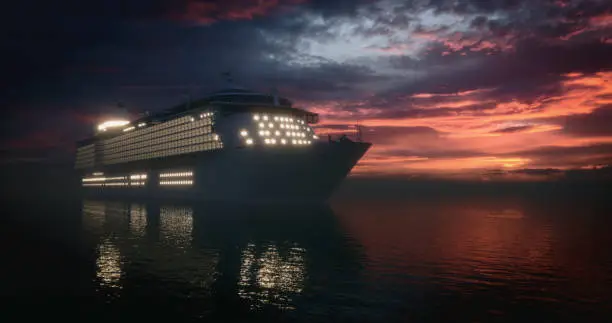
By now, you’ve probably seen the photographs: a gleaming white cruise ship slicing through turquoise waters, surrounded by means of seabirds and sunsets. It looks like paradise. But underneath the glittering decks and infinite buffets lies a quiet, growing disaster, one which’s finally being confronted with courage, innovation, and real change.
For many years, the cruise ship industry has been painted as the villain of ocean pollution: burning heavy gas oil, dumping waste into open seas, and leaving carbon footprints larger than whole cities. And for a long term? The public became away. We loved the freedom, the romance, the break out and we didn’t want to reflect on consideration on the fee.
But times are converting.Today, a quiet revolution is unfolding at the high seas.Not with protests or boycotts however with engineering, partnerships, and bold leadership. Seven groundbreaking eco-campaigns are now reshaping what a cruise deliver may be: now not only a floating motel, however a beacon of ocean stewardship.
This isn’t greenwashing.This isn’t advertising and marketing fluff. This is real. And if you’ve ever dreamed of sailing below the celebs, you need to understand it.
Table of Contents
1. Royal Caribbean’s “Zero Emissions at Port” Initiative: Turning Ports Into Power Hubs
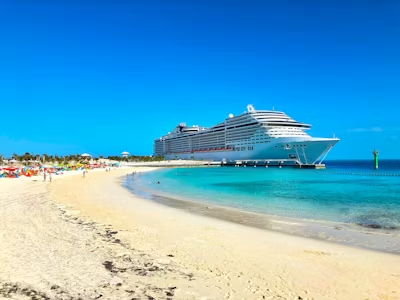
When you think of a cruise ship, you imagine it gliding across open waters.But here’s the truth: Most of a ship’s environmental damage occurs while it is docked.That’s why Royal Caribbean launched its Zero Emissions at Port campaign a $200 million global initiative to get ships to plug into clean, shore-based electricity instead of idling their diesel engines.
In ports such as Los Angeles, Barcelona and Singapore, ships are now connected to the grid like electric cars at charging stations. outcome? 90% reduction of air pollutants at the wharves.In 2023 alone, this one campaign will eliminate 18,000 tonnes of CO₂ equivalent to taking 4,000 cars off the road for a year.
And here’s the key: It’s not just about emissions. It’s about health. Coastal communities near ports often low-income areas breathed in toxic fumes from idling engines. Now the children can play outside. Elderly people can open their windows. This is not stability. This is justice.
2. Norwegian Cruise Line’s “Ocean Guardian” Program: From Waste to Wonder
Imagine: a crew of 1,500 people on a cruise ship produces approximately 50 tonnes of waste every week.Plastic bottles.Food remains. Packaging. That’s enough to fill a small house – every single day.Norwegian Cruise Line didn’t just reduce waste. He thought about it again.
Their Ocean Guardian program turned ruin into wonder.Using AI-powered sorting systems and on-board recycling facilities, they now convert 85% of their waste into reusable materials. Food waste is turned into biogas to power ship systems. The plastic is cut, melted and molded into deck furniture. Even used cooking oil? It is refined into biodiesel.But magic? They let the passengers see it.On select ships, guests can walk through a glass-walled “recycling gallery” watch their coffee cups reborn as coasters, their plastic bottles transformed into lampshades.
Children draw pictures of sea turtles next to sorting machines. It’s not just cleaning. This is education. This is changing.One guest wrote: “I used to think cruise ships were part of the problem. Now I think I’m part of the solution.”
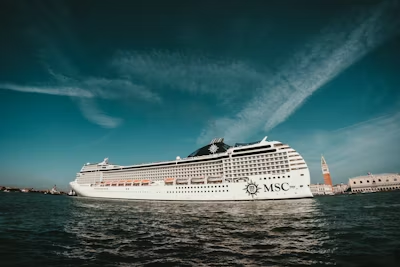
3. MSC Cruises’ First Liquefied Natural Gas (LNG) Ship: The Quiet Revolution in Fuel
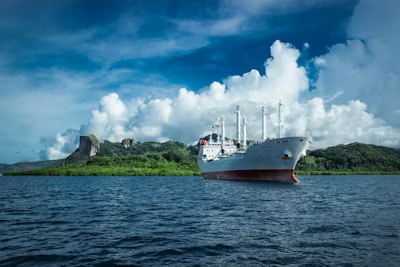
If you’ve ever puzzled how a hundred and eighty,000-ton floating town can run cleanly, meet MSC Cruises’ MSC Euribia.Launched in 2023, this isn’t just every other ship. It’s the sector’s first LNG-powered mega-cruise delivery. And it’s now not a prototype, it’s operational, reliable, and scaling rapidly.
LNG cuts sulfur emissions by ninety nine%, nitrogen oxides by 85%, and CO₂ by means of up to twenty% as compared to standard marine gasoline. No smokestacks. No black plumes. Just clean-burning gasoline that leaves the ocean cleaner than it observed it.
But right here’s what no person talks about: the human price of grimy gas.Fishermen inside the Mediterranean used to keep away from fishing near cruise routes, the water became too acidic, the fish too scarce. Now, a few are returning. One fisherman in Greece told a reporter: “The sea smells different now. Cleaner. Like it recollects the way to breathe.”MSC isn’t stopping right here. They’ve ordered six more LNG ships and pledged to phase out heavy fuel oil completely through 2030.
4. Princess Cruises’ “Seas of Change” Plastic-Free Challenge: No More Bottles, Just Beauty
Plastic bottles on cruise ships? They were everywhere. On the pool deck. In the cabins. In the trash can.Princess Cruises decided: Enough.Their Cease of Change campaign didn’t just ban single-use plastics. He replaced them with elegance.
Glass water bottles?Replaced with sleek, reusable stainless steel bottles engraved with your name, delivered to your cabin on the first day.Water station? Installed on each deck. Snow? Now made with filtered tap water. Even straws? bamboo.
But here’s the catch: They turned it into a game.Guests receive an ‘Ocean Hero’ badge for each refill. Families compete to see who can go the furthest without using single-use plastic.Winners will receive a complimentary spa treatment or sunset cocktail on deck.outcome? 98% reduction in plastic bottle waste. And something even more powerful: a culture change.A 12-year-old girl wrote in her cruise journal: “I didn’t know I could help the ocean. Now I’m asking my friends at school to bring their bottles too.”
5. Celebrity Cruises’ “Blue Planet Initiative”: AI That Predicts and Protects Marine Life
This one’s technological know-how fiction turned fact.Celebrity Cruises partnered with marine biologists and AI engineers to construct Blue Planet Initiative, a real-time ocean tracking system that uses satellite data, sonar, and system gaining knowledge to stumble on whale migration paths, coral bleaching zones, and touchy marine habitats.
When the system detects a high-danger quarter, the ship mechanically adjusts its route slowing down, changing direction to keep away from annoying whales, dolphins, or fragile reefs.
In 2024, this machine avoided over 1,two hundred ability whale collisions throughout the Caribbean and Alaska.But here’s the heart of it: they made it public.
Passengers can now view live “Ocean Pulse” dashboards on their TVs watching whales swim past their delivery in real time, with a mild notification: “You’re sailing with humpbacks these days. Thank you for slowing down.”It’s no longer simply generation. It’s reverence.
One visitor, a marine biologist, wept as she watched a pod of orcas glide under her window. “I’ve spent my life analyzing them,” she said. “I had no idea I’d see them from a cruise delivery and feel happy with it.”
6. Carnival Corporation’s “Carbon Neutral Cruising” Pilot: Turning Emissions Into Trees
Carnival Corporation the parent company behind Carnival, Holland America and Costa Cruises did not wait to perfect the technology.He acted.Their Carbon Neutral Cruising pilot allows guests to voluntarily offset the carbon footprint of their trip not with vague donations, but with verified real-world replanting.
For every $10 offset, they plant 10 native trees in the Amazon, Costa Rica or the Philippines tracked by blockchain, photographed and sent to you with GPS coordinates.But here’s the genius: They made it into a story.
Each tree is given a name. Tell me your name. You get a digital “forest passport” with photos of your tree growth, rainfall data and wildlife views.An Ohio man named his tree “Luna” after his late daughter. Every month they get an update: “Luna grew 12 inches this month. Two toucans built nests in her branches.”More than 200,000 trees have been planted.And for the first time, a cruise holiday isn’t just a memory – it’s a legacy.
7. The “Green Fleet Alliance”: When Rivals Become Allies
Here’s the most powerful campaign of all because it’s not from one company.It’s from all of them.In 2024, seven major cruise lines including Disney, Viking, and Hurtigruten formed the Green Fleet Alliance. A secret pact. No press releases. No branding. Just action.
They share R&D. They pool data on fuel efficiency. They co-invest in zero-emission fuel cells. They even standardize waste protocols so ports don’t have to handle 7 different systems.
One insider told me: “We used to compete over who had the biggest pool. Now we compete over who can cut emissions the fastest.”
It’s rare in business. Even rarer in an industry that thrives on spectacle.But when you’re sailing through a coral reef that’s dying you don’t care who owns the ship. You just want it to stop hurting.
Why This Matters, More Than You Think
You might think: “I’m just one person.What difference does my cruise make?”But here’s the truth: cruise ships are moving cities. They carry 30 million people a year. That’s more than the population of Canada.Every time a ship switches to clean energy, every time plastic disappears, every time a whale is saved it doesn’t just help the ocean.
It changes us.It reminds us that luxury doesn’t have to cost the earth.That vacation doesn’t have to mean guilt.That the most powerful thing we can do. isn’t to stop traveling.It’s to travel differently.
The Future Isn’t Just Green. It’s Glorious.
The old image of the cruise ship polluting leviathan is fading.The new one? A floating laboratory. A classroom. A sanctuary.A place where technology serves nature. Where science meets soul. Where a family from Minnesota can sip champagne under the stars and know they’re not just enjoying the view they’re protecting it.
This isn’t the end of cruising.It’s the beginning of a better kind.And if you’ve ever dreamed of setting sail now, you can.With clear conscience.With wonder.With hope.Because the sea is still beautiful.And thanks to these seven campaigns. It’s learning how to heal.
Final Thought:
The next time you book a cruise, ask: “Is this ship part of the problem or the solution?”
The answer might just change the way you travel forever.
1. Are cruise ships really becoming more sustainable?
Yes 7 groundbreaking eco-campaigns are cutting emissions, eliminating single-use plastics, and using clean fuels, pushing the industry toward net-zero by 2050.
2. What’s the biggest change happening on cruise ships today?
Advanced wastewater recycling and shore power connections letting ships turn off engines and plug into clean electricity while docked.
3. Can travelers really make a difference?
Absolutely choosing cruises with certified green campaigns (like those using LNG or AI-powered energy systems) drives demand for real change.