
Cruise Ship Secrets Revealed: 5 Jaw-Dropping Hidden Features
So, you’ve been on a cruise ship delivery. Maybe you’ve even been on some. You know the drill: the towering atrium, the bustling buffet, the sun-sopping wet pool deck, and the glittering nightly shows. You’ve mapped your path from your stateroom to the martini bar with expert precision. You feel like you’ve seen all of it, and you’ve unlocked the total experience of lifestyles at sea.
What if I advised you that you’ve most effectively scratched the surface?
Beyond the well-trodden carpets and the acquainted clinking of glasses lies a parallel universe. It’s an international network of hidden passages, clandestine clubs, and engineering marvels that maintain the complete floating metropolis going for walks seamlessly. The cutting-edge cruise delivery is a masterpiece of design and logistics, and a number of its most first-rate functions are deliberately—or by the way—kept out of simple sight.
Ready to drag the curtain again? Here are 5 jaw-dropping hidden capabilities of your favorite cruise ship to change the way you notice your next vacation.
Table of Contents
1. The Crew’s World: A Secret City Beneath Your Feet
This is the biggest and deepest mystery with any trip: spacious, stir, and a completely different world dedicated to the crew. While passengers are released on top tires, a complex human ecosystem is lukewarm below the waterline.
1. Where they live and play:
Most passengers never look at the crew’s home, and for a good reason. Access is strictly limited to crew members, marked as “crew”. The back of these doors is a maze of corridors, cabins, root halls, and entertainment areas. The crew’s own bar (where the price of a beer is a fraction of the passenger price), your own gym, your own internet cafe, and even offering their own healthy lines on the ship’s bow often offer some of the most amazing, personal ideas on the entire cruise ship.
2. A glimpse of the scale:
On the Royal Caribbean’s Symphony of the Seas, like the Mega cruise ship, more than 2200 crew members are serving around 6,700 passengers. It is the size of a small town, which is complete with its own hierarchy, social life, and daily rhythm. They work incredibly hard on contracts that can last for months without a day off. This hidden city is their sanctuary, their home, and the engine room for hospitality that makes the holiday possible.
3. Why does it leave the jaw?
The pure scale and confidence of this operation is shocking. It is a will for the scheme that enters a modern cruise ship, which is not only designed for passenger comfort, but must also maintain the lives of thousands of employees from more than 100 different countries during an extended period at sea.
2. The Brig: The Ship’s Floating Jail Cell
The last thing with T is that someone wants to think about vacation, but security is an important concern for any ship carrying thousands of people. Yes, your floating resort has a gel, universally known as “The Brigade” with marine words.
1. Your average lock is not:
Usually, a crew is deep inside the ship on the deck, the brigade is a small, sporton room – usually just one or two minimal cells with basic beds and toilets. It is not designed for long-term chaos, but for temporary ownership. Its primary purpose is to separate a passenger or crew member who becomes dangerous, violent, or suspected of a serious offense to the ship, so that they can reach a port where local authorities can handle them.
2. How often is it used?
Very few. Cruise Ship Safety Teams are highly trained in De-Escles, and the only risk of brigades is usually sufficient to calm most conditions. Most trips never use it. But existence is an important part of the ship’s safety infrastructure and ensures the safety of everyone on board. This recalls that even in the sky, there are rules and results.
3. Why this jaw is going to leave:
It crushes the illusion of a cruise ship as a lawless sky. There is a powerful symbol of the complex, real-world rules present in the sea, with its own legal frameworks and security protocols to handle any situation.
3. The Incinerator Room & Advanced Waste Management
What happens to all waste? “This is one of the most common and important questions about these huge ships.
1. A short process facility:
Deep inside the hull is a whole department dedicated to it. What happens here:
1. Food waste: Non-developed food waste is often put into a solution and is released from far away into the sea, where it is biodegradable. Some new ships are experimenting with dehydrated food to further reduce the volume.
2. Glass, plastic, and boxes: These are carefully recycled in the next port, crushed, and stored on the board.
3. Paper and cardboard: Compressed in lumps for onshore recycling.
4. Everything else: This is where the notorious consumer comes. Non-rich, combustible waste is burned at extremely high temperatures, which exceeds 90%of the volume. The ash is then stored for disposal on the ground. Even the heat generated by the consumer is often used to help the ship’s water systems heat up.
2. Why is it about to leave the jaw:
The entire operation is a hidden, 24/7 process that most passengers are not aware of. This transforms the image of a cruise ship from a potential source of environmental toxins to a very effective, independent processing function, which reflects the industry’s significant progress towards stability.
4. The “Secret” Decks for the Best Views
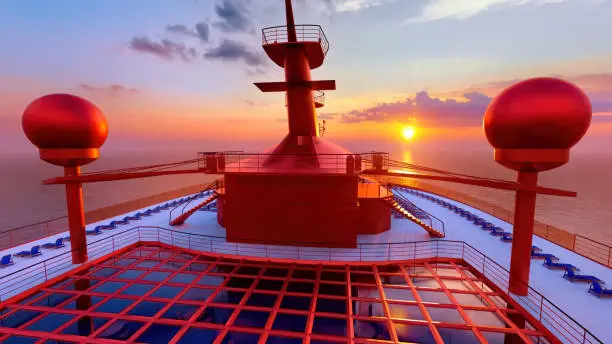
Tired of fighting for a sleeping space in a crowded railing for a sailaway party or a big sunset scene? Experienced cruisers in many vessels are called “secret” tires. These are often ignored, publicly available regions that provide fantastic, uninterrupted views.
1. Where you find them:
The most common place is the front of the ship on the lower deck. Often, you can walk all the ways under a passenger corridor by deck 5, 6, or 7 until you reach a heavy, outstanding door. Push it up (it’s not always easy!) And you will often find yourself on a small, exposed tire on the ship’s bow – the same scenes that the authorities get from the bridge, just reduced to several tires. It’s wind, it’s royal, and 90% of passengers don’t know it’s there.
Another hotspot is the end of the ship. While many suites have private back balconies, it is often public roads or paths that lead to the devoting areas directly over waking up, offering a mental, hypnotic view of the brainstorming path through the sea.
2. Why does it leave the jaw:
In an environment where the space is at a premium, it sounds like searching for a cool, beautiful place like finding a hidden treasure. This is your personal moment with the sea, a cool migration from the lively energy of the main deck. There is a feature of the cruise ship designed for searches.
5. The Hospital: A Fully-Staffed Medical Center at Sea
You are in the middle of the sea. What will happen if you have a medical emergency? It is a fear of many people, but reality is incredibly confident. Each large cruise ship has a fully equipped medical facility, and 24/7 employees are provided by licensed doctors and nurses who can handle everything from sea attacks and masks to heart attacks and severe shock.
1. More than just a first aid station:
Modern medical centers are impressive. They are usually located on a lower deck (for stability) and are equipped with:
1. Many patients’ examination halls
2. An ICU bed capacity
3. Defibrillators and heart monitors
4. X-ray machines and laboratory equipment for blood tests
5. Filled with a wide range of pharmacy medicines
6. Fan and equipment for advanced life support
7. Medical staff and ICU professionals are experienced, which can stabilize a patient for hours or days until the ship can reach a port or helicopter dissemination.
2. It is about to leave the jaw:
We believe a cruise ship is a place for vacation, but it is also a self-sufficient society that must be prepared for every crisis. The presence of a small, advanced hospital shows an incredible commitment to passenger safety that goes beyond rescue boats and life jackets. It is a hidden safety net that provides intensive security so you can really relax.
6. Seeing the Ship with New Eyes
Next time you cycle on a royal cruise ship, you will know that more to it than meets the eye. You will understand that a dedicated crew society under your feet is a medical facility prepared for a sophisticated waste management system, and whatever. You want to know that it is a protocol for everything, and maybe a hidden tire is waiting for you to search for it.
These secrets are not different from the magic of a cruise; They increase it. They reveal the human simplicity, plan, and effort required to create that magic. It is a reminder that the biggest strange thing for a modern cruise ship is not just a zipline or Broadway show – it’s an innocent execution of a million small details, both seen and ignored, coming together to make your right vacation.
Q: Can passengers ever access the crew-only areas?
A: Generally, no. For safety, privacy, and operational reasons, crew-only zones are strictly restricted. Exceptions are extremely rare and require special authorization.
Q: Are the underwater lounges available on all cruise lines?
A: No—these are exclusive features found only on select luxury or expedition ships. Mainstream cruise lines typically don’t include them.
Q: How do desalination plants affect the environment?
A: Modern systems are designed to minimize ecological impact, with strict regulations on brine discharge and energy use. Many newer ships also incorporate energy-recovery tech to improve efficiency.