Cruise Ship Accessibility: 7 Heartwarming Innovations Making Travel Inclusive
Introduction
For years cruising brought to mind visions of sunlit decks, sophisticated dining areas and far-off destinations all apparently crafted for travelers without physical challenges.What happens if your movement is restricted? What if you explore the world accompanied by a guide dog using a wheelchair? Have sensory sensitivities? Does the ideal of a Cruise Ship holiday vanish before it starts?Not anymore.
The cruise sector is experiencing a significant change driven not only by adherence but by empathy. Cruise operators are redesigning every hallway, room and adventure, with one primary people-focused aim: inclusivity. Accessibility is no longer an afterthought or a mere requirement; it is evolving into an element of today’s Cruise Ship journey.
In this article, we explore seven heartwarming innovations both technological and deeply human that are turning once-distant dreams into joyful realities for travelers of all abilities.These aren’t just features; they’re invitations. Invitations to adventure, connection, and the profound peace of knowing you belong on board and beyond.
Table of Contents
1. Universal Staterooms Designed with Dignity (Not Just Compliance)
The era when ” cabins” referred to just a marginally broader door and a grab bar clumsily attached to the wall is over. Nowadays inclusive staterooms on Cruise Ship lines such as Royal Caribbean, Norwegian and Celebrity exemplify thoughtful and compassionate design.
Envision a bathroom featuring sinks with roll-under access flooring that flows into the shower area and handheld showerheads installed at various levels. Visualize closet rods and safety controls placed within reach for someone seated. Think about motion-activated lights that gently light your way at night without glare.
What truly sets this apart? Dignity as a standard. These spaces aren’t marked as “handicapped” or hidden in areas. Instead they are seamlessly incorporated into the vessel’s design, elegant and open to anyone who requires them free from any negative connotations. Parents with strollers, individuals with walkers and passengers healing from operations all gain from this all-encompassing method.
Royal Caribbean’s Icon of the Seas, for example, features over 100 fully accessible staterooms each thoughtfully configured with adjustable-height furniture, visual doorbells, and even vibrating alarm clocks for guests who are Deaf or hard of hearing.This isn’t just regulatory compliance; it’s emotional architecture design that says, “You matter. Your comfort matters.”
2. Sensory-Friendly Spaces for Neurodiverse Travelers
Travel can bombard the senses lobbies, loud announcements, bright flashing lights in the casino. For travelers especially those, with autism, anxiety or sensory processing challenges a Cruise Ship may appear as a challenging environment.Enter the rise of dedicated sensory-friendly zones.
Cruise operators such as MSC and Disney Cruise Line currently provide low-stimulation lounges: spaces featuring gentle lighting, noise-blocking headphones, sensory toys and soothing color schemes.These havens offer a refuge when the environment becomes overwhelming or too intense.
What is more significant is the incorporation of sensory awareness into daily activities. Buffets now feature menus adorned with ingredient symbols easing decision overload. Theater productions provide ” performances” where house lights are softened and sound effects lowered. Staff are educated in neurodiversity sensitivity gaining skills to identify signs of discomfort and react with understanding, rather than criticism.
One mother shared how her nonverbal son, who’d never traveled beyond his hometown, sat on a Cruise Ship balcony watching dolphins calm, engaged, and smiling for the first time in months. “It wasn’t just a vacation,” she wrote. “It was validation.”
3. Seamless Shore Excursions with Inclusive Transfers
The biggest frustration for many travelers with mobility challenges? Getting off the ship.
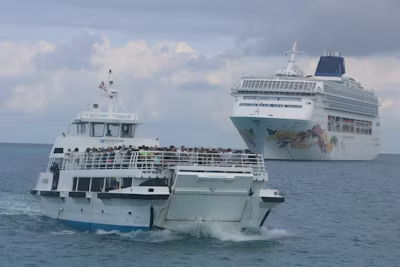
Traditionally tender boats ( rafts transporting guests from ship to shore) were difficult to access. Ramps had inclines, docks were irregular and tour buses lacked modifications. However innovation is driving transformation.
Cruise companies are collaborating with providers to present all-terrain wheelchair tours, imagine beach wheelchairs equipped with balloon tires that smoothly traverse sand or amphibious transports that move seamlessly from land into water.
Norwegian Cruise Line’s “Access Ashore” initiative ensures transportation that accommodates wheelchairs and guides skilled in disability assistance.In Alaska visitors can hop on a customized catamaran to see glaciers from a ramp-accessible deck. In the Mediterranean electric scooters designed for off-road use enable travelers to navigate cobblestone paths previously considered “off-limits.”
And perhaps most revolutionary? Tender lifts with platform stabilization. These hydraulic systems lower a secure, level platform directly into the water, allowing wheelchair users to board tenders without transfers. Holland America Line and Princess Cruises have already implemented these on select ships turning “I can’t” into “I did.”
4. AI-Powered Communication Tools for Guests Who Are Deaf or Hard of Hearing
Transparent communication is fundamental to inclusivity. On a Cruise Ship, where verbal announcements are crucial, for safety instructions, dinner bookings and entertainment timetables guests who are Deaf or hard of hearing have frequently experienced feelings of exclusion or even insecurity.Currently AI translation and real-time captioning are closing the divide.
Applications such as onboarding platforms, like Royal Caribbean’s Royal App currently provide:
Live captioning for live shows and safety drills.
Visual alerts for cabin announcements (doorbell, phone, emergency).
Video remote interpreting (VRI) services via cabin tablets.
Sign language menus in dining venues.More impressive? A few vessels are testing glasses that show captions, within the user’s sightline during guided tours or crew communications.
These tools do more than convey information; they restore autonomy.A guest can independently book a spa treatment, understand a comedian’s punchline, or follow evacuation instructions without relying on a traveling companion.That’s not just convenience; it’s liberation.
5. Service Animal Support That Goes Beyond the Basics
Journeying alongside a service dog involves teamwork but significant practical challenges. Where will the dog do its business? Where can it take breaks during dining? Will the staff recognize its purpose?Progressive Cruise Ship lines are addressing these issues through rounded service animal initiatives.
Carnival Cruise Line offers relief zones equipped with waste disposal units and fresh water bowls across several decks. MSC supplies in-cabin “potty grass mats that replicate outdoor toileting. Celebrity Cruises designates an accessibility officer to support service animal requirements from reservation through, to disembarkation.
The touching aspect? Crew training. Employees are instructed to identify service animals (not merely emotional support companions) , comprehend their roles and ensure they remain with their handler at all times even in crisis situations. A veteran recounted how his PTSD service dog was greeted at the captain’s table a moment that moved him to tears.This level of support transforms a trip from a logistical hurdle into a journey of mutual respect.
6. Cognitive Accessibility: Wayfinding, Reminders, and Predictable Routines
For individuals with dementia, Alzheimer’s or cognitive impairments the changing setting of a Cruise Ship can be confusing. Changing timetables, unknown people and complicated designs might lead to stress or bewilderment.The solution? Predictability through personalized tech.Cruise Ship applications now provide:
Customizable itineraries with visual timelines.
Step-by-step navigation using Bluetooth beacons.Gentle vibration reminders for meals, shows, or medication.“Safe return” functions that notify personnel if a visitor moves outside a designated area.
Aboard understated design elements, color-coded deck signs, textured floor indicators and recognizable background tunes, in common spaces establish a feeling of flow and security.
Perhaps most touching is the human element: crew members trained in dementia-friendly communication, using calm tones, simple choices (“Would you like tea or water?”), and patience over correction. On a recent cruise ship sailing, a guest with early-onset Alzheimer’s danced with her husband every night guided not just by music, but by a crew who remembered her name, her story, and her joy.
7. Inclusive Entertainment That Celebrates All Bodies and Minds
Genuine inclusion goes beyond access; it also involves representation and active involvement.Contemporary Cruise Ship entertainment is advancing past bodied artists and inactive viewers. Caribbean’s Symphony of the Seas presented a dance routine designed by a wheelchair user combining aerial silks and adaptive choreography into an impressive spectacle.Disney Cruise Line provides sign language-interpreted renditions of Broadway-style musicals.
Fitness classes are also reinvented: seated yoga, modified Pilates and water-based aqua therapy sessions accommodate every skill level. Nobody hears, “That’s not suitable for you.”What about dining? Menus feature Braille and large-print versions allergen symbols and personnel educated in needs not as special cases but as routine practice.This change communicates a statement: Your involvement enhances our group. Your narrative has a place.
Why This Matters: Beyond Compliance, Toward Connection
These seven advancements go beyond ramps or applications; they represent a sense of inclusion.The Cruise Ship industry’s commitment to accessibility reveals a reality: travel is not an exclusive privilege. It is a right an engine for happiness, insight and bonding.When a person in a wheelchair views the sunset alongside others on the deck, when a nonverbal child giggles at a magician’s performance, when a veteran with PTSD experiences peace, in the ocean’s cadence we all elevate.
The ripple effects are far-reaching.Families come together. Caregivers receive a break. Strangers forge friendships, through experiences that go beyond ability.As an advocate for Cruise Ship accessibility expressed it: “Inclusion doesn’t mean altering the individual. It’s about transforming the environment surrounding them so they are free to be.”
The Horizon Ahead
Although obstacles persist aging vessels being updated, uneven port facilities, hurdles the drive is unmistakable. Rules such as the U.S. Cruise Vessel Accessibility Standards (CVAS) encourage advancement. It is the innate wish to embrace others that is speeding transformation.
If you’ve ever held back from reserving a Cruise Ship holiday due to worries about accessibility, understand this: the sector is paying attention. And it’s not merely incorporating features, it’s infusing compassion into the core of the experience.So pack your bags (or your wheelchair, your service dog, your noise-canceling headphones).The sea is calling and this time, it’s calling for you.
1. Are modern cruise ships wheelchair accessible?
Yes most major cruise lines now offer fully accessible staterooms, elevators, public areas, and even pool lifts, designed in partnership with accessibility experts.
2. Can guests with mobility challenges join shore excursions?
Many cruise lines provide accessible shore excursions with adapted transportation and trained staff always request options when booking.
3. Do cruise ships accommodate sensory or cognitive disabilities?
Absolutely. Innovations like quiet rooms, sensory-friendly event spaces, and crew trained in neurodiversity support ensure a welcoming experience for all.