Cruise Ship Industry Insights: 10 Jaw Dropping Statistics You Need to Know
Introduction
The ocean doesn’t just move water it moves dreams.Every year, more than 30 million people board a cruise ship, not just to travel, but to escape. To leave behind spreadsheets, school drop-offs, traffic jams, and the quiet ache of routine. They step onto those floating cities gleaming with steel and sunlight not as tourists, but as temporary citizens of a world where the horizon is your neighbor, the buffet never closes, and the only schedule that matters is the rhythm of the waves.
The cruise ship industry isn’t just about luxury cabins and ocean-view balconies. It’s a $150 billion global engine of emotion, economy, and escapism. And beneath the glitter of champagne toasts and live orchestras lies a system so vast, so intricate, and so surprising that even seasoned travelers don’t know the half of it.Here are 10 jaw-dropping statistics not just numbers, but stories in disguise that reveal the true soul of the modern cruise ship.
Table of Contents
1. Over 30 Million People Board a Cruise Ship Each Year, More Than the Entire Population of Canada
Let that sink in.More people choose to spend their vacation on a cruise ship than live in the entire country of Canada.In 2023, the Cruise Lines International Association (CLIA) reported 31.4 million global cruise passengers a number that’s rebounded faster than any other sector of travel after the pandemic.Why? Because the cruise ship isn’t just a mode of transport. It’s a sanctuary.
Think about it: a family of four from Ohio doesn’t just book a hotel in Miami.They book a vacation that moves. They wake up to the Atlantic, lunch in the Caribbean, and watch the sunset over the Mediterranean all without repacking their bags. The cruise ship becomes their home, their transportation, their entertainment complex, and their dining room all rolled into one.
And it’s not just retirees. Millennials and Gen Z are now the fastest-growing segment. Why? Because for them, the cruise ship isn’t nostalgia, it’s experiential luxury. A TikTok-worthy escape that delivers Instagrammable sunrises, themed nights, and immersive cultural experiences all while they sip a cocktail with a paper umbrella.The cruise ship doesn’t just carry people. It carries stories.
2. The Largest Cruise Ship in the World Weighs More Than 200,000 Tons, That’s 3 Times the Weight of the Eiffel Tower
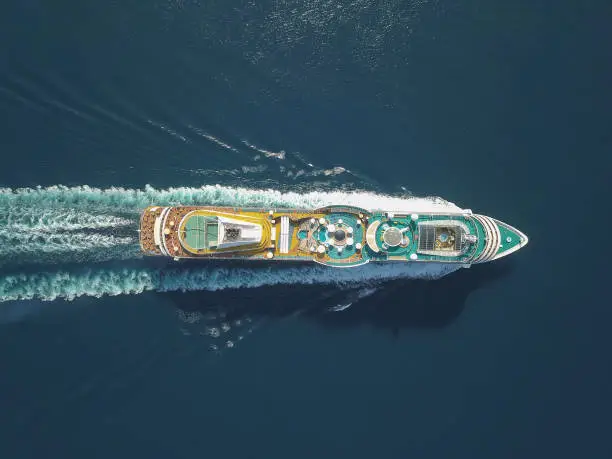
Meet Wonder of the Seas the current titan of the seas.Launched by Royal Caribbean in 2022, this floating metropolis is 1,188 feet long longer than four football fields.It has 18 decks.2,867 staterooms.20 restaurants.A water park.A full-size basketball court.A Broadway-style theater.And a zip line that stretches from the 18th deck to the 11th.But here’s what no one tells you: it weighs 236,857 tons.That’s not just big.It’s monumental.
To put that in perspective: the Eiffel Tower weighs about 10,100 tons.So this one ship?It’s heavier than 20 Eiffel Towers stacked on top of each other and it glides across the ocean like a dream.And yet, despite its size, it’s designed to feel intimate.Every hallway curves to hide the scale.Every balcony offers a private moment.The staff-to-guest ratio?One crew member for every 1.5 guests.That’s more personal attention than most five-star hotels offer.The cruise ship isn’t just engineering.It’s psychology.It makes you feel small in the best way.You’re a speck on a floating city, yet you’re treated like royalty.That paradox?That’s the magic.
3. A Single Cruise Ship Can Generate Over 200 Tons of Waste Per Voyage, And the Industry Is Fighting Back
Let’s talk about the shadow side.While the cruise ship dazzles, it also consumes. A typical 7-day voyage produces more than 200 tons of waste food scraps, plastics, sewage, gray water. In 2019, the industry generated over 1.5 million tons of solid waste globally.For years, critics painted cruise ships as environmental villains. But here’s the twist: the industry didn’t ignore the criticism. It transformed.
Today, every major cruise line invests in cutting-edge waste management.Advanced wastewater treatment systems turn sewage into water cleaner than what flows from most municipal plants.Food waste is composted or converted into biofuel.Single-use plastics have been banned on 90% of ships.Royal Caribbean’s Icon of the Seas uses a system that recycles 95% of its water.
And it’s not just tech it’s culture.Crew members are trained as “Ocean Ambassadors.”Guests are invited to participate in “Green Cruising” challenges.Onboard, you’ll find refillable water stations, digital menus to cut paper waste, and even AI-powered systems that track food consumption to reduce leftovers.The cruise ship industry is no longer the polluter it was.It’s becoming one of the most innovative sectors in sustainable tourism.Because when you’re surrounded by the ocean for days on end you learn to love it. And when you love something, you protect it.
4. The Cruise Ship Industry Employs Over 1.2 Million People Worldwide, Many from Developing Nations
Behind every cocktail served, every deck swept, every child’s laugh heard on the pool deck is a human story.More than 1.2 million people work on cruise ships globally.And here’s what makes this number extraordinary: over 70% of them come from developing countries the Philippines, India, Indonesia, Romania, and Ukraine.For many, a job on a cruise ship isn’t just employment it’s transformation.
A 22-year-old from Manila might start as a housekeeping attendant, earn $1,200/month (far above her local average), and send money home to support her siblings’ education.In five years, she’s a supervisor. In ten, she’s training new hires. Her story?It’s written in the rhythm of the ship’s engines.
Cruise lines are among the most diverse workplaces on Earth.You’ll find chefs from Thailand, dancers from Brazil, engineers from Poland, and entertainers from Nigeria all working side by side, speaking a language of smiles, not words.And when you’re on board, you don’t see their passports. You see their talent. Their pride. Their joy.The cruise ship doesn’t just transport people across oceans it connects the world, one crew member at a time.
5. Cruise Ships Generate More Than $100 Billion in Economic Impact Annually, More Than Many Countries’ GDPs
Let’s get real about money.The cruise ship industry doesn’t just make money it builds economies.In 2023, cruise tourism generated $108 billion in global economic impact.That’s more than the GDP of countries like Moldova, Paraguay, or Belize.In the Caribbean, 70% of tourism revenue comes from cruise ships.In Alaska, 90% of visitors arrive by sea.In Italy, ports like Venice and Rome see entire neighborhoods come alive only when the big ships dock.
Local vendors sell handmade jewelry.Fishermen supply fresh lobster.Musicians perform on piers. Small towns that once struggled now thrive because a cruise ship stops for 8 hours.And it’s not just ports. Think about the supply chain: fuel, food, laundry, medical supplies, entertainment tech, even the uniforms worn by staff all sourced locally or regionally.The cruise ship is a floating economic engine. And for many coastal communities, it’s the only engine they have.
6. The Average Cruise Passenger Spends Over $1,000 on Extras, And It’s Not What You Think
You think they’re spending on champagne and spa packages.They are.But here’s what’s really driving the spend: experiences.The average cruise passenger spends $1,100+ on add-ons and it’s not just shore excursions. It’s a $120 private dinner on a secluded island. The $85 cooking class with the executive chef. The $65 glass-blowing workshop in Santorini. The $400 photography package captured their first kiss at sunset.
Why? Because on a cruise ship, time becomes precious. You’re not just passing through a destination, you’re living it. And you want to remember it.Cruise lines have become master storytellers. They don’t sell vacations. They sell memories with a soundtrack.
A couple celebrating their 25th anniversary?They get a private sunset cocktail on the bow, a handwritten note from the captain, and a framed photo of them dancing under the stars.A family with teens?They get a “Digital Detox Challenge” where they earn points for putting phones away and exploring together.The cruise ship doesn’t just cater to your wants. It anticipates your heart’s quietest desires.
7. Nearly 40% of First-Time Cruise Passengers Are Under 35, And They’re Rewriting the Rules
Remember when cruise ships were for retirees in cardigans?That stereotype died in 2020.Today, nearly 40% of first-time cruisers are under 35. Gen Z and millennials aren’t just showing up, they’re redefining what a cruise ship means.They book “wellness cruises” with yoga on deck at sunrise. They attend midnight poetry slams in the theater. They take “digital nomad” cruises with Wi-Fi strong enough to work from the pool.
They don’t want to be entertained. They want to be transformed.And cruise lines are listening.Royal Caribbean now offers “Tech & Travel” itineraries with VR tours of ancient ruins. Norwegian Cruise Line has “Cruise & Code” programs for aspiring developers. Disney’s new ships feature immersive Star Wars experiences that let kids become Jedi.The cruise ship is no longer a relic. It’s a canvas.And the new generation is painting it with purpose, passion, and pixels.
8. Cruise Ships Visit Over 1,000 Ports in 170 Countries, More Than Any Other Form of Tourism
Think about this: how many countries have you visited?One?Two?Maybe five?Now imagine a single cruise ship visiting 10 different countries in 14 days each port a new culture, a new flavor, a new heartbeat.The cruise ship industry touches more countries than any other form of travel.From the fjords of Norway to the coral reefs of Papua New Guinea, from the ancient temples of Egypt to the bustling markets of Vietnam cruise ships are the ultimate global connectors.
And here’s the secret: most passengers don’t just see these places.They feel them.In Dubrovnik, a local violinist plays for guests on the old city walls.In Bali, a temple priest blesses the ship before it docks.In Alaska, a Haida elder teaches guests how to carve cedar bark.
The cruise ship doesn’t just bring tourists. It brings respect.And that’s why UNESCO and local governments now partner with cruise lines not to stop them, but to enhance them.Because when you arrive on a cruise ship, you don’t just walk into a town. You walk into a story.
9. Over 80% of Cruise Passengers Say They’ve Never Been Happier on Vacation, And It’s Not the Pool
You’d think it’s the infinity pools.The chocolate-dipped strawberries.The live jazz.But according to a 2024 survey by the Cruise Lines International Association, 83% of cruise passengers say they’ve never been happier on vacation.Why?
Because on a cruise ship, you stop trying.You stop planning. You stop stressing. You stop checking your phone.You let the rhythm of the sea carry you.There’s no agenda. No Uber rides. No restaurant reservations. No packing and unpacking.Just you, your loved ones, and the endless blue.That’s the real magic.
It’s not a luxury. It’s liberation.
One woman told me, “I didn’t realize I’d forgotten how to breathe until I stood on the deck at 3 a.m., watching the stars reflect on the water, and realized I hadn’t thought about work in three days.”That’s the power of the cruise ship.It doesn’t give you a vacation.It gives you back yourself.
10. The Cruise Ship Industry Will Grow 40% by 2030, But the Real Story Is About Connection
By 2030, the cruise ship industry is projected to grow by 40%.New ships are being built.New destinations are being unlocked. New technologies like AI-powered personalization and zero-emission propulsion are being tested.But here’s what no report will tell you:
The future of the cruise ship isn’t about size. It’s about the soul.It’s about the grandmother who finally meets her granddaughter’s partner on the ship’s deck, and they hug like they’ve known each other forever.
It’s about the single dad who books a cruise to reconnect with his teenage daughter and they laugh over ice cream at 2 a.m. for the first time in years.It’s about the widow who joins a “Singles Sail” cruise and finds a friend who understands loss and ends up planning a trip to Paris with her.
The cruise ship doesn’t just move people across oceans.It moves hearts.It rekindles relationships.It heals loneliness. It turns strangers into family.And in a world that feels increasingly fragmented, that’s the most powerful statistic of all.
Final Thought:
The next time you hear someone say, “I’m going on a cruise,” don’t think of it as a luxury.Think of it as a lifeline.A quiet revolution.
A floating promise that sometimes, the best way to move forward is to let the sea carry you.
Q1: Is the cruise industry really recovering after the pandemic?
A: Yes and faster than most industries. In 2023, global cruise passenger numbers rebounded to 92% of pre-pandemic levels, with 31 million travelers sailing worldwide. By 2025, industry analysts project a full recovery, with record-breaking bookings and new ship launches driving demand.
Q2: Why are cruises becoming more expensive?
A: Rising fuel costs, port fees, and labor expenses have pushed prices up but so has demand. Luxury and expedition cruises are booming, with passengers willing to pay premiums for smaller ships, exclusive destinations, and enhanced wellness offerings. The average cruise fare has increased nearly 25% since 2019.
Q3: Are cruises still environmentally harmful?
A: While past practices drew criticism, the industry is undergoing a major green transformation. Over 90% of new ships launched since 2020 feature advanced scrubbers, LNG propulsion, or hybrid-electric systems. Major lines like Royal Caribbean and Carnival now target net-zero emissions by 2050 making modern cruising far cleaner than it was a decade ago.